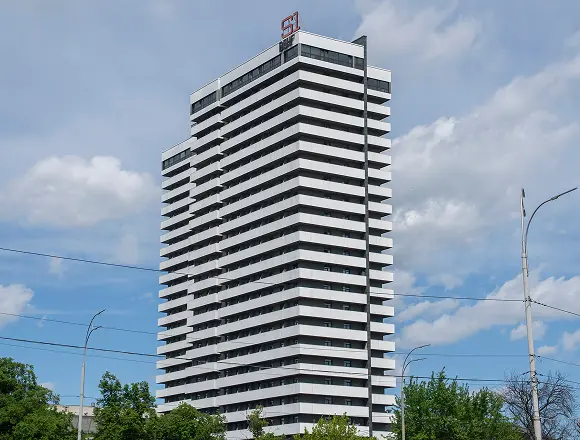
Investing in income-generating property: a pre-purchase checklist

The income-generating property market can look simple at first, but the more you learn, the more complex the picture becomes. You need to understand how income-generating property works, compare what different projects are offering and spot potential risks before you commit to a deal. Above all, you need to assess honestly, across a range of factors, which investment format suits you best.
A flat can become a stable asset or a constant source of hassle. The difference lies not in square metres, or even in the rate of return, but in who manages the property and how, and what happens when things don’t go to plan.
This article is for anyone planning to buy a flat or apartment themselves, and for those looking for more passive ways to invest.
Below is an analytical guide to the key questions to ask yourself – and the project – before you invest. It draws on our hands-on experience with income-generating property, market analysis and conversations with investors who have already been down this path.
Section 1. Property type
Before investing, you need to understand exactly what type of property you are buying into. Ukraine today offers several ways to invest in property – from a traditional buy-to-let flat, apartments and aparthotels to rental buildings and recreational (resort) projects.
At first glance they may look alike, especially among the different types of income-generating property, since all of them promise rental income. But they differ significantly in how they are managed, how involved the owner (or investor) has to be, their operational risks and how predictable the returns are. Properties that earn more in peak periods (such as holiday properties) often demand more involvement and carry a higher risk of void periods. Those without peak demand often yield less over the year.
If the property type means most of the work depends on you personally, ask yourself honestly whether you are ready for that in the long run.
Section 2. Management and the management company
Even in an attractive location, a flat will not generate a stable income without effective management. Management is what determines occupancy, service quality, how quickly problems are dealt with and, ultimately, the financial result.
A professional management company does more than find tenants. It brings service standards, a clear financial model, regular reporting and interests aligned between the manager and the asset owner. If the management company has a stake in long-term occupancy, the investor gets a more predictable income.
Where there is no management, or it is disorganised, the investor effectively becomes the operations manager.
With income-generating property, management matters as much as the property itself.
Section 3. Actual returns
When assessing an investment, look not just at the stated return but at the income left after all expenses. And there will be expenses: commissions, repairs or replacing furniture and bathroom fittings, and taxes. Together, these extra costs can significantly affect the final result.
A sound financial model allows for this and considers several scenarios – ideally a base case, an optimistic case and a conservative case. That is what shows you how the investment will perform if the market changes or something unforeseen happens.
Returns without context are just marketing. Returns that take risks into account are an investment decision.
Section 4. Demand and location
Even the best-built flat with the finest modern furniture will not be a stable asset without sustained demand for it. What matters is not just the address on the map, but who needs the property and why.
Demand depends on several factors: transport links, proximity to workplaces or places of study, everyday amenities and the overall character of the area. What’s more, the location has to work not only today but in a few years’ time as well.
The building or residential complex itself also plays its own part in attracting tenants. Security, amenities, communal areas, energy-efficient features and comfort have a direct impact on occupancy and rent levels.
Today’s tenants want more than just a flat – they expect extra perks. That is because they choose a home not as a standalone property in a vacuum, but as part of their everyday life. In the same way, people don’t choose a restaurant on a single dish, or a car on engine power alone.
Section 5. Liquidity
Property investment has long appealed to Ukrainians for a whole range of reasons, and it is always a long game. But even with long-term decisions, you need to understand how, and on what terms, you can exit the asset.
Liquidity depends on many factors: the ownership structure, transparent documentation, a clear management model and how the market perceives the asset overall. An asset that is easy to explain to another investor tends to sell faster.
It also pays to keep several scenarios in mind, not just one: selling the property, holding it for longer, changing how it is let or used, or refinancing the investment. The more options you have, the lower the risk.
Section 6. The investor and their strategy
Two identical investments can succeed or fail depending on who is investing. Your own strategy, goals and needs, investment horizon and attitude to risk matter as much as the property itself.
As our friend and partner Dmytro Karpilovskyi, founder of the UkrInvestClub investor community, says: invest a little of your time before you invest your money 🙂
Some want a regular monthly income, others put capital preservation first, and for others the dream is to see their asset grow in value over time. Investors also differ in their appetite for risk and in how involved they are comfortable being.
The more honestly investors answer these questions at the outset, the easier it is to choose an investment format that won’t cause tension or stress later on.
Food for thought: how much of your time should this investment cost you?
When people talk about investing in income-generating property, they usually focus on the figures: rates of return, payback periods and capitalisation. But there is another factor that is often underestimated – your own time.
Even in a well-designed project, investing directly in a flat or apartment means making a lot of small decisions. For some, that is part of the appeal. For others, it is a burden.
Try to answer these questions honestly:
– Do I want to be involved in management?
– Am I prepared to spend time making decisions and checking that they are carried out?
– Am I comfortable carrying all the risks of one specific property on my own?
If you answer ‘yes’ to most of these questions, the traditional direct investment model may suit you. If ‘no’, consider other formats too.
Joint investment as an alternative to buying property directly
Joint investment is a format in which the investor does not buy an individual flat but takes part in the collective ownership of a property or property portfolio. In Ukrainian law this is defined as a ‘collective investment institution’; in other words, REITs, property funds and the like. The foreign term ‘REIT’ has already taken root in Ukraine and is in common use, so it is fine to use it.
In joint investment, a professional team handles management, day-to-day operations and oversight, while the investor receives a return as regular income and growth in the asset’s value (capitalisation). This approach is neither ‘better’ nor ‘worse’ than direct investment – it simply works on a different logic.
Collective investment may suit you if you value:
– entering the property market with a smaller initial outlay;
– professional management;
– a transparent financial model;
– minimal involvement;
– a clear way into and out of the investment;
– the ability to exit quickly;
– asset diversification.
To learn more about joint investment in income-generating residential property, see the example of S1 REIT: https://reit.s1.ua/ua
For those who want to dig deeper
Analytical reports on income-generating property in Ukraine show the market gradually moving away from ad hoc private lettings towards more structured models, in which management, service standards and financial logic are built into the project from the design and development stage. Over time, it is this systematic approach that becomes decisive for investors, whether the property is a flat, an apartment or a rental building.
The income-generating property market in Ukraine is still taking shape, but it is already developing in line with current global trends. If you want a deeper understanding of the context, the size of the market and international experience, we recommend these analytical pieces, which look at these processes in more detail:
- How the income-generating property niche is developing in Ukraine and worldwide
An analysis of how the income-generating property segment is taking shape, which models work in mature markets, who the key players are and how these approaches are being adapted to Ukrainian conditions.
https://kosht.media/yak-rozvyvaietsia-nisha-dokhidnoi-nerukhomosti-v-ukraini-ta-sviti/
- The income-generating property market in the US, the UK, Austria, Poland and Ukraine
A comparative overview of different markets and letting models that helps explain why income-generating property is growing.https://kosht.media/yak-rozvyvaietsia-rynok-orendnoi-nerukhomosti-v-ssha-velykobrytanii-avstrii-polshchi-ta-ukraini/
- The population is getting poorer while property is getting more expensive: why flat prices are rising despite the war
An analysis of the macroeconomic factors affecting Ukraine’s property market. https://epravda.com.ua/infrastruktura/chomu-cini-na-neruhomist-zrostayut-popri-bidninnya-ukrajinciv-analiz-rinku-816961/
- An interview on investing in income-generating property and the thinking behind its management
A conversation about the practical side of investing, property management and the long-term logic of the market. https://interfax.com.ua/news/interview/1137797.html
- An article on the different types of income-generating property and the pros and cons of each
https://hmarochos.kiev.ua/2026/02/16/shho-take-dohidna-neruhomist-i-navishho-vona-potribna/
There is no one-size-fits-all approach to investing in income-generating property. What works well for one investor may be unsuitable or ineffective for another.
That is why the aim is not to find the one perfect format, but to choose the one that fits your goals, planning horizon and how involved you are willing to be.
If this article has left you with more questions than answers, that’s a good thing. Well-considered investment decisions start with questions like these. We’re happy to advise if you need us 🙂
Want more details?
Leave a request and we’ll tell you more about the project and current terms, and answer your questions.